
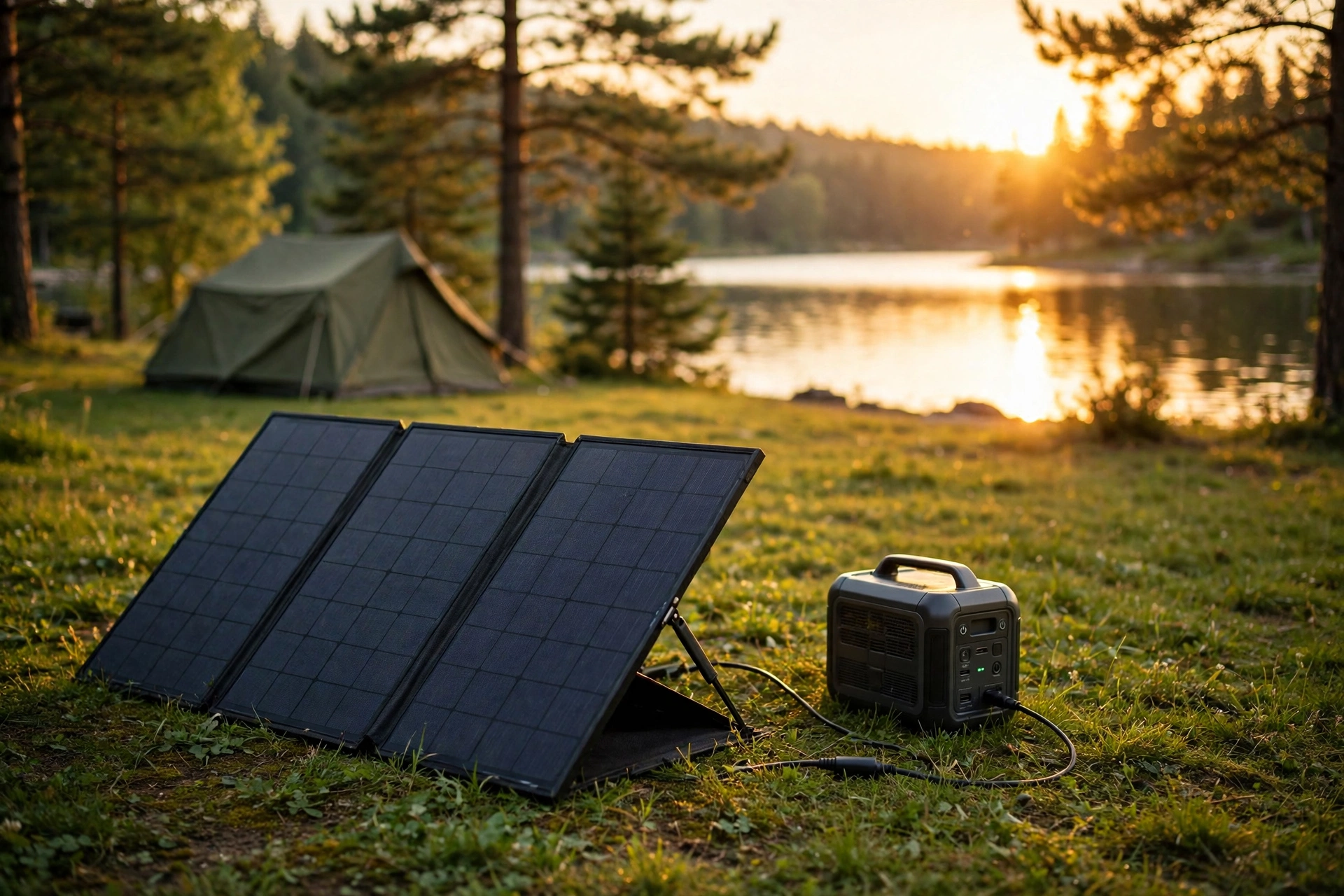
The short answer: the best solar generator for most people is the Anker SOLIX C1000 Gen 2 with a 200W panel — 1,024Wh of LiFePO4 battery, a 2,000W inverter, a 600W solar input, and a 200W bifacial panel in the box that refills about three-quarters of the battery on a good sunny day, for about $800–$850 as a kit. If you want the cheapest 1kWh kit, the EcoFlow DELTA 3 Plus with a 220W panel is $919. For home backup, the Bluetti Elite 200 V2 with a 200W panel gives you 2,074Wh for about $1,099–$1,199 — but budget for a second panel, because the one in the box refills barely a third of that battery per day. And if your loads are small, the Bluetti Elite 30 V2 with a 100W panel covers a weekend of phones and laptops for $489.99.
Disclosure: we may earn a commission if you buy through links on this page — see our disclosure. The links here are plain manufacturer links with no affiliate tracking attached. Prices were checked against manufacturer and retailer sites in October and November 2026 and move often with sales, so treat every price below as a snapshot, not a quote.
This is a research roundup, not a hands-on test: picks rest on published specs, owner reports, and published measurements as of November 2026. It is the hub for the whole solar-generator topic — the station-only comparison lives in our best portable power station roundup, and the price-band and use-case roundups below go deeper on each slice.
Quick picks
- Best overall kit: Anker SOLIX C1000 Gen 2 + 200W panel — 1,024Wh, 2,000W, about $800–$850
- Best value 1kWh kit: EcoFlow DELTA 3 Plus + 220W panel — 1,024Wh, 1,800W, $919
- Best for carrying: Jackery Explorer 1000 v2 + SolarSaga 200W — 1,070Wh, 1,500W, about $700–$750
- Best for home backup: Bluetti Elite 200 V2 + 200W panel — 2,074Wh, 2,600W, about $1,099–$1,199
- Most expandable kit: EcoFlow DELTA 2 Max + 2× 220W panels — 2,048Wh, 2,400W, about $1,529 on sale
- Best small kit: Bluetti Elite 30 V2 + 100W panel — 288Wh, 600W, $489.99
What a solar generator actually is
A solar generator is not a new kind of machine. It is a portable power station — a lithium battery with a built-in inverter and a solar charge controller — sold together with one or more folding panels. The station stores the energy; the panel is the refill. The name is marketing, and it misleads in one specific way: it suggests the panel is the product, when the station is what decides what you can run and for how long.
That framing matters because the two halves are bought as one box but judged on different numbers. The station is judged on watt-hours (how long), inverter watts (what it can run), and solar input watts (how fast it can refill). The panel is judged on watts and on how much of the station it refills per day. In every kit below, the panel in the box is smaller than the station’s solar input — the panel, not the station, is the bottleneck. A 200W panel on a station that accepts 600W of solar is a slow refill by design, and the kit price hides that: you pay for a solar-capable system and get a top-up panel.
The refill math is simple. On a day with 4.5 peak sun hours, a panel delivers roughly its wattage × 4.5 × 0.85 in watt-hours — the 0.85 covers charge-path losses and real-world panel output below the label. A 200W panel adds about 765Wh per good day; a 220W panel about 840Wh; a 440W pair about 1,680Wh. Compare that against the battery, and the kit’s real character shows up.
| Kit | Panel in box | Refill on a good day (4.5 sun hours) | Share of battery refilled |
|---|---|---|---|
| Bluetti Elite 30 V2 + 100W | 100W | About 380Wh | Full refill — and more |
| Anker SOLIX C1000 Gen 2 + 200W | 200W | About 765Wh | About 75% of 1,024Wh |
| EcoFlow DELTA 3 Plus + 220W | 220W | About 840Wh | About 82% of 1,024Wh |
| Jackery Explorer 1000 v2 + 200W | 200W | About 765Wh | About 71% of 1,070Wh |
| EcoFlow DELTA 2 Max + 2× 220W | 440W | About 1,680Wh | About 82% of 2,048Wh |
| Bluetti Elite 200 V2 + 200W | 200W | About 765Wh | About 37% of 2,074Wh |
The pattern is the buying lesson: the small kits refill fully, the 1kWh kits refill most of the way, and the 2kWh kits on a single 200W panel refill barely a third. If your plan is to live off solar for days, the panel matters more than the station — buy the kit, then add a second panel, or buy the station alone and size the panels yourself. Our how to charge a power station with solar panels guide covers panel sizing in full.
The comparison
Kit prices are US dollars from manufacturer sites and major retailers as of October–November 2026. Every kit here lists well above its sale price for part of the year, so the price column shows the sale price you can realistically expect. Buying the kit beats buying the parts separately on every brand we checked — an October 2026 check of 13 official-store bundles found savings of $18 to $429 per kit — but the saving is only real if the included panel is one you would have bought anyway.
| Kit | Capacity | Inverter (continuous) | Battery | Solar input max | Panel in box | Kit price, Nov 2026 |
|---|---|---|---|---|---|---|
| Anker SOLIX C1000 Gen 2 + 200W | 1,024Wh | 2,000W | LiFePO4, 4,000 cycles | 600W | 200W bifacial | About $800–$850 |
| EcoFlow DELTA 3 Plus + 220W | 1,024Wh | 1,800W | LiFePO4, 4,000 cycles | 1,000W | 220W bifacial | $919 |
| Jackery Explorer 1000 v2 + SolarSaga 200W | 1,070Wh | 1,500W | LiFePO4, 4,000 cycles | 400W | 200W | About $700–$750 |
| Bluetti Elite 200 V2 + 200W | 2,074Wh | 2,600W | LiFePO4, 6,000+ cycles | 1,000W | 200W | About $1,099–$1,199 |
| EcoFlow DELTA 2 Max + 2× 220W | 2,048Wh | 2,400W | LiFePO4, 3,000 cycles | 1,000W | 440W bifacial | About $1,529 on sale (list $1,579) |
| Bluetti Elite 30 V2 + 100W | 288Wh | 600W | LiFePO4 | 200W | 100W | $489.99 |
Every station here uses lithium iron phosphate (LiFePO4) cells, rated for 3,000 to 6,000-plus cycles before capacity falls to 80 percent — roughly four to eight times the life of the older NMC packs. Check for “v2,” “Gen 2,” “Plus,” or “LiFePO4” in the name before buying: the original Jackery Explorer 1000 and the original EcoFlow Delta still appear in listings at prices close to these picks, with older chemistry and lower output.
Anker SOLIX C1000 Gen 2 + 200W panel — best overall kit
The most capable all-round kit at this size: 1,024Wh, a 2,000W inverter with 3,000W surge, and LiFePO4 cells rated for 4,000 cycles, at 24.9 lb for the station, plus a 200W bifacial PS200 panel that weighs about 10.6 lb. It recharges from a wall outlet in 49 minutes, takes 600W of solar — the joint-best input in the 1kWh class — and its 10 ms UPS switchover holds a router or computer through a blackout. The 2,000W inverter is the deciding feature: it is the only 1kWh station here that runs a microwave, a coffee maker, or a small air conditioner alongside everything else, which is what turns a camping box into a genuine home-backup tool.
The kit price is the one thing to watch: Anker’s own store lists the bundle at $849.99, with third-party sellers showing $799.99 to $829.99, so the panel adds roughly $250 to $300 over the station alone — fair for a 200W bifacial panel, but not a bargain. The trade on the station itself is expansion: unlike the original C1000, the Gen 2 cannot take an expansion battery, so 1,024Wh is the ceiling. If you think you will want 2kWh later, buy the EcoFlow Delta 2 Max kit instead. For everyone else, this is the most capable kit in this roundup. Check the current price on Anker’s site.
EcoFlow DELTA 3 Plus + 220W panel — best value 1kWh kit
The cheapest way into a 1kWh solar generator: 1,024Wh, an 1,800W inverter with 3,600W surge, and LiFePO4 cells rated for 4,000 cycles, with a 220W bifacial panel in the box for $919 — the lowest kit price in the 1kWh class. Its 1,000W solar input is the highest here relative to capacity: two solar inputs take up to 500W each, so the 220W panel in the box uses only a fifth of the headroom, and a second 220W panel brings the daily refill to a full battery. It charges 0 to 100 percent in about 56 minutes from the wall and carries a 5-year warranty.
The trade is output: 1,800W covers nearly every household appliance, but it will not run a 2,000W load the Anker handles, and the Delta 3 Plus is not expandable with extra batteries. At $919 it undercuts the Anker kit by roughly $100 while including a slightly bigger panel, which makes it the value pick — the Anker wins only if you need the extra 200W of inverter headroom. Check the current price on EcoFlow’s site.
Jackery Explorer 1000 v2 + SolarSaga 200W — best for carrying
The lightest 1kWh kit and the easiest to live with: 1,070Wh, a 1,500W inverter with 3,000W surge, and LiFePO4 cells rated for 4,000 cycles, at 23.8 lb for the station, with a 200W SolarSaga panel. It recharges from the wall in about 1.7 hours in standard mode, or about 1 hour in emergency-charge mode, and its 100W USB-C port charges a laptop directly without the inverter. Jackery also has the deepest service history of any brand here, and a 5-year warranty. Note the name: Jackery now sells this station as the HomePower 1000 v2 — same unit, new badge.
The weakness is solar input: 400W maximum, against 500 to 1,000W for the rest of the 1kWh group, so a solar refill takes longer — about 7 hours of good sun from the bundled 200W panel. The kit price also moves more than the others: an October check found it at $719, while Jackery’s own store showed $749 to $939 in November depending on color. If your plan is to recharge mostly from the wall and carry the unit often, this is the right call. If you plan to live off solar for days, the Anker or EcoFlow refills faster. Our Jackery Explorer 1000 review covers the station in full. Check the current price on Jackery’s site.
Bluetti Elite 200 V2 + 200W panel — best for home backup
The big-capacity pick: 2,074Wh, a 2,600W inverter with 3,900W Power Lifting for resistive loads, and LiFePO4 cells rated for 6,000-plus cycles — double the cycle rating of the Delta 2 Max at similar money. Its 1,000W solar input is the highest here, so a matched panel array refills it in about 2.5 hours of good sun, and it reaches 80 percent from the wall in about 50 minutes. At 53.4 lb it is a two-hand carry, not a one-hand carry, but for a box that lives on a garage shelf and runs a fridge, router, and lights through a two-day outage, that is the right trade.
The honest caveat is the panel in the box: a single 200W panel refills only about 37 percent of this battery per sunny day, so the kit as sold is a one-day answer with a slow refill. Bluetti knows it — the same store page sells the station with two 200W panels for $1,499, and that is the version to buy if solar refill is your plan. The station alone is $899, and the 200W-panel kit runs about $1,099 to $1,199 depending on where you buy. Do not confuse this with the Bluetti AC200L, the 2,048Wh station it replaces: Bluetti’s US store now marks the AC200L discontinued, so buy the Elite 200 V2 unless you find a genuine AC200L discount. Our Bluetti AC200L review explains the switch in full. Check the current price on Bluetti’s site.
EcoFlow DELTA 2 Max + 2× 220W panels — most expandable kit
The oldest design here and still the most flexible: 2,048Wh, a 2,400W inverter with 4,800W surge and X-Boost handling loads up to 3,100W, and room to grow to 6,144Wh with extra batteries. The two 220W bifacial panels in the box are the real differentiator — 440W of panel refills about 82 percent of the battery per sunny day, the only 2kWh kit here whose included panels keep pace with its battery. It charges 0 to 80 percent in about 43 minutes from the wall, takes 1,000W of solar, and carries a 5-year warranty.
The trade is age and cycle life: the Delta 2 Max is a 2023 design, and its 3,000-cycle rating is the lowest in this group — the Bluetti Elite 200 V2 rates 6,000-plus. At about $1,529 on sale (list $1,579) it costs roughly $330 more than the Bluetti 200W-panel kit, and that premium buys the second panel and the expansion path. If you will never expand, the Bluetti is the better buy at the same money; if you want a system that grows, this is the kit. Check the current price on EcoFlow’s site.
Bluetti Elite 30 V2 + 100W panel — best small kit
The small pick, and the cheapest way into a proper solar generator: 288Wh, a 600W inverter with 1,500W Power Lifting, and LiFePO4 cells, at 9.5 lb for the station, with a 100W panel in the box for $489.99. The 600W inverter is the surprise — double the Jackery Explorer 300 Plus’s 300W at a similar size — so it runs a small blender or a CPAP with a humidifier where other small kits cannot. Its 140W USB-C port charges a laptop directly, its UPS switchover is under 10 ms, and the 100W panel refills the whole battery in a good day of sun.
The limit is the obvious one: 288Wh is a day of small electronics, not a weekend of refrigeration, and 600W is still no coffee maker or microwave. But for phones, laptops, lights, and a CPAP for a night at a campsite, it is all you need, and the lightest kit here by a wide margin. If your loads grow past that, step up to the 1kWh class above. Check the current price on Bluetti’s site.
Find your size: the detailed guides
This hub picks across the whole market. If you already know your budget or your use, the detailed roundups go deeper on one slice each:
- Under $300: our best portable power station under $300 roundup compares five small stations, including the Jackery 300 Plus, Bluetti EB3A, and EcoFlow River 2.
- Under $500: our best portable power station under $500 roundup covers the 1kWh class at its cheapest — the Anker C1000 Gen 2, Jackery 1000 v2, and Bluetti AC70.
- Under $500 kits: our best solar generator under $500 roundup covers complete station-and-panel kits for $500 or less — the Bluetti Elite 30 V2 and Jackery Explore 300 bundles — and the discontinued models to stop hunting for.
- Under $1,000: our best portable power station under $1,000 roundup compares five 1kWh models in full, including the Pecron E1000LFP value pick.
- Camping: our best portable power station for camping roundup weighs capacity against carry weight for weekends off-grid.
- Home backup: our best solar generator for home backup guide sizes a station plus panels for keeping a fridge, lights, and communications running through an outage.
- RV: our best RV solar kit roundup covers fixed roof-panel systems for RVs, a different job from a portable station.
- Station only: our best portable power station roundup compares the same stations without panels, if you already own panels or charge mostly from the wall.
And if you are choosing between brands rather than models, our head-to-head guides compare EcoFlow vs Jackery, EcoFlow vs Bluetti, and the EcoFlow Delta 2 vs Jackery Explorer 1000. Our how to charge a power station with solar panels guide covers the panel side in detail.
Sizing it to your loads
Start with a list, not a product page. For each item, multiply its watts by the hours a day it runs to get watt-hours per day, add the items up, then divide by 0.85 for inverter losses. That is your daily need; multiply by the days between recharges.
Example: phones and lights (100Wh), a laptop at 70W for 3 hours (210Wh), a router at 10W for 12 hours (120Wh) — about 430Wh per day, about 505Wh after losses. A 288Wh Bluetti covers about half a day of that; a 1,024Wh Anker covers two days. Add a 12V fridge cycling at an average of 50W (1,200Wh per day) and the daily need jumps to about 1,900Wh after losses — now you are in Elite 200 V2 territory, or a 1kWh station plus a panel that refills it daily.
That is why the panel matters: a 200W panel adds about 765Wh on a good sunny day, a 400W panel about 1,530Wh, which stretches a 1kWh station across a weekend or an outage. Without solar, size for the whole trip; with solar, size for a day. Check the watts on the device itself, not the category: a “mini fridge” can mean a 40W compressor fridge or a 100W thermoelectric cooler, and the difference doubles your battery need. And remember the inverter ceiling: a station can hold the watt-hours for a job and still fail it if one load’s watts exceed the inverter.
What a solar generator cannot do
No portable kit will run a full-size home refrigerator for more than a day or two — a typical full-size fridge uses 1,000 to 1,500Wh per day, so even the 2,074Wh Elite 200 V2 covers about a day and a half. None here will run a space heater, air conditioner, electric water heater, or well pump for long: a 1,500W heater empties a 1,024Wh station in about 40 minutes, and most of these stations cannot even start one. None powers a whole home, backs up a house through a multi-day outage on its own, or runs a 240V appliance, and none replaces a built-in RV or cabin system for full-time living. And no bundled panel refills a big station in one day on its own — the 2kWh kits need a second panel, or a second day of sun, to refill fully.
What the category does well is the portable job it was built for: a weekend of camping power for phones, laptops, and lights, a night or two of fridge, CPAP, and communications through an outage, and a solar-fed base camp that refills itself each day. Buy inside that envelope and a $500 to $900 kit is a genuinely capable tool; outside it, no amount of brand loyalty fixes the physics.
How to buy
- Check the price on the day. Every kit here lists well above its sale price and spends part of the year on sale, and the sale price is the real price — a “list $1,579” kit at $1,529 is a $1,529 kit; at $1,579 it is a different purchase.
- Judge the panel, not just the station. A 200W panel on a 2,074Wh station refills barely a third of the battery per day. If solar refill is your plan, the second panel is not an accessory — it is half the system.
- Check the variant name. Explorer 1000 v2, now sold as the HomePower 1000 v2. C1000 Gen 2, not the original C1000 (which expands; the Gen 2 does not). Elite 200 V2, not the discontinued AC200L. Delta 3 Plus, not the original Delta. The older variants are still listed, sometimes at similar prices, with older chemistry or lower output.
- Compare the kit against buying separately. Kits usually save $18 to $429 over the parts, but only if the included panel is one you would have bought anyway. If you already own panels, buy the station alone — our best portable power station roundup prices the stations on their own.
- Budget for the second panel. The station is half the system: a second 200W portable panel costs about $200 to $400, and without one the 2kWh kits are batteries you charge at home. See our portable solar panels hub for matched panels.
- Count your outlets and your watts. Two AC outlets covers a fridge and a laptop; the USB-C wattage matters too — a 100W or 140W port charges a laptop directly, a 15W port does not. And add up the watts of everything you want to run at once before you buy: pass the inverter’s continuous rating and the station shuts down.
- Read the warranty terms, not just the years: the Anker, Jackery, EcoFlow, and Bluetti kits all carry 5-year station warranties — but registration windows, battery coverage, panel coverage (often 12 months), and service location differ by brand.
Methodology
Compiled in November 2026 from manufacturer spec sheets and store pages (Anker, Jackery, EcoFlow, Bluetti), retailer listings, published runtimes, and owner reports, building on our detailed price-band and use-case roundups published in October and November 2026, each checked against at least two sources per figure. Capacities, inverter ratings, solar input maxima, weights, and cycle-life figures were checked against at least two sources each. Kit prices are US list and sale prices observed on manufacturer and retailer sites in October–November 2026; they change frequently, so list and sale prices are stated separately where they differ. A November 2026 SERP check confirmed the market shape: the same six kits lead current roundups, with EnergySage and Popular Science among the authorities on the head term — a MIXED SERP, not a weak one. No unit was hands-on tested, and no runtime here comes from our own measurement — runtimes are manufacturer-published or calculated from the 85 percent rule and the 4.5 peak-sun-hour refill formula above. If a figure here disagrees with a manufacturer’s current page, that page wins; check it before buying.